
Executing a successful date night layout without relying on visual media requires an understanding of how fabrics and silhouettes interact with environmental factors like lighting, temperature, and architecture.
An outfit must do more than fit well; it must balance structural textures against the formality of the venue.
By replacing vague style trends with clear geometric laws—such as managing hemline drops, contrasting fabric weights, and selecting textile compositions based on light reflectivity—you can build a highly scannable style matrix optimized for search engine discovery.
1. Low-Light Refraction: The Silk or Crepe Little Black Dress
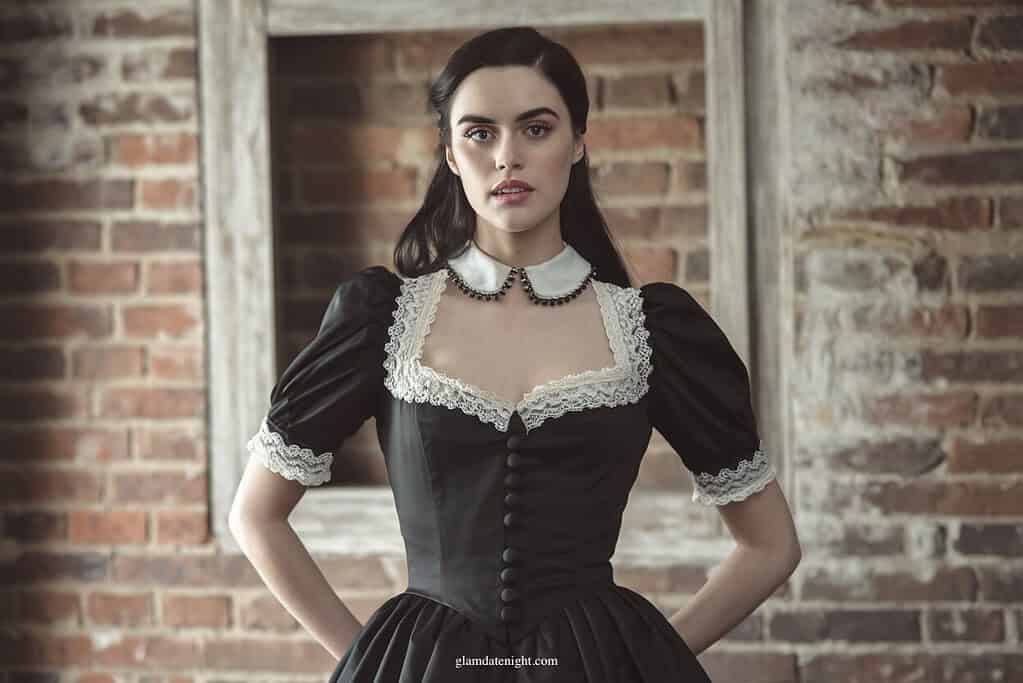
- The Light Reflectivity Rule: In dimly lit evening venues, a plain black cotton or jersey dress will absorb light entirely, making your silhouette disappear into the background. To keep a clear visual shape in low-light settings, select a little black dress made from a light-reflective 100% mulberry silk, heavy acetate satin, or high-twist wool-crepe.
- Outerwear Geometry: Pair a fluid, soft-drape slip dress with a contrasting rigid layer. Add a cropped top-grain leather jacket or a tailored menswear blazer with sharp 0.5-inch interior shoulder pads. The hard horizontal lines of the jacket shoulders frame the soft drape of the dress.
- The Hemline-to-Footwear Anchor: When styling a mini-length black dress, avoid thin, unstructured flats. Ground the high hemline by pairing it with structured leather mule slides, square-toe ankle boots, or pointed-toe slingback heels to create a continuous vertical line down your legs.
2. The 3-Texture Formula: Compact Ribbed Tank, Denim & Structured Blazer
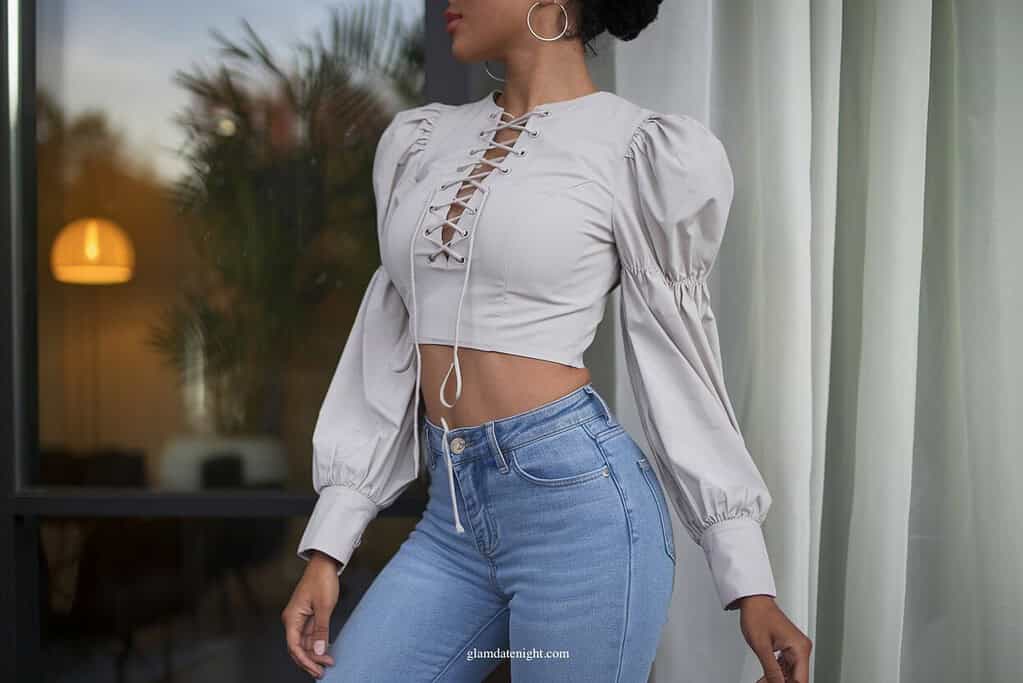
- The 3-Texture Casual Contrast Rule: To make a casual daytime look intentional rather than sloppy, your outfit must feature three distinct fabric textures: a high-stretch knit, a rigid woven denim, and a structured tailored layer.
- The Silhouette Layout: Pair a high-compression, double-lined 1×1 ribbed cotton tank top with mid-rise, 100% cotton straight-leg denim. The high-compression knit holds a clean, smooth line against the torso, while the rigid denim provides an independent structural drape that doesn’t sag over time.
- The Finishing Layer: Complete the layout by adding an unbuttoned, slightly oversized tweed or houndstooth blazer. Ensure the jacket sleeves are pushed up to the elbows to expose your mid-forearms, which reveals the narrowest bone structures of your arms and makes the casual outfit look polished.
3. Volumetric Geometry: Long-Sleeve Velvet or Satin Maxi Dress

- The Visual Mass Metric: A full-length maxi dress carries a lot of visual weight. To prevent the fabric from overwhelming your body shape, look for variations with a deep V-neckline or an exposed clavicle line. This exposure breaks up the solid block of color and balances the overall look.
- The Winter/Spring Fabric Threshold: For cooler indoor dates, select a heavyweight velvet or a 300 GSM winter-knit maxi dress. For warmer weather, swap to a fluid matte viscose or sand-washed satin. These fabrics drape heavily toward the floor, creating a natural vertical line without clinging to skin folds.
- The Footwear Clearance: To prevent your hemline from dragging or bunching up around your feet, ensure the dress hem terminates exactly 1.5 inches above the ground when wearing your choice of footwear. Pair the dress with sleek, close-toed leather Chelsea boots or minimal mule slides to anchor the wide hemline cleanly.
4. The Mid-Calf Ratio: Ribbed Midi Dress & Block-Heel Footwear
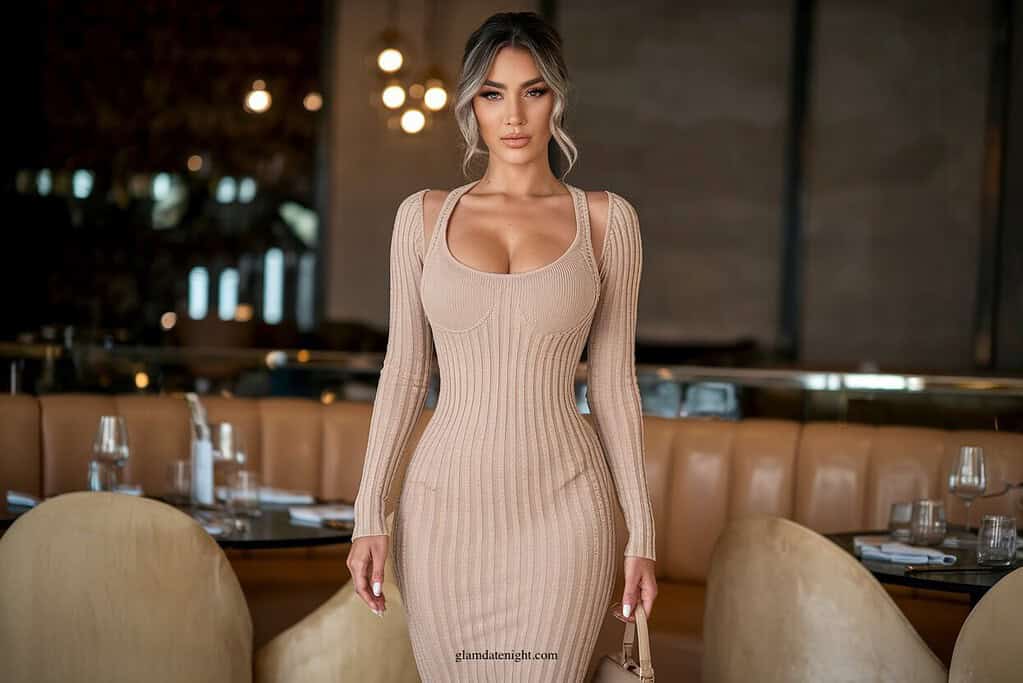
- The Mid-Calf Proportion Law: A midi dress must terminate precisely at the narrowest part of your mid-calf. If the hemline drops lower toward the ankles, it cuts off your natural leg line and visually shortens your height. A clean mid-calf termination preserves your natural body proportions.
- The Compression Factor: Select a midi dress made of a dense, double-knit Ponte de Roma or a heavy viscose-nylon blend. This material provides built-in support, ensuring the dress keeps its sleek structural lines without riding up or gathering while you are seated.
- Footwear Alignment for Truncated Hemlines: Because a mid-calf hemline reduces the exposed leg line, steer clear of ankle-strap heels, which create a harsh horizontal line across your ankle. Instead, opt for pointed-toe ankle boots, low block-heel mules, or clean white leather sneakers with a low-cut collar to maximize your lower body length.
5. High-Low Balance: Structured Blazer, Graphic Tee & Distressed Denim
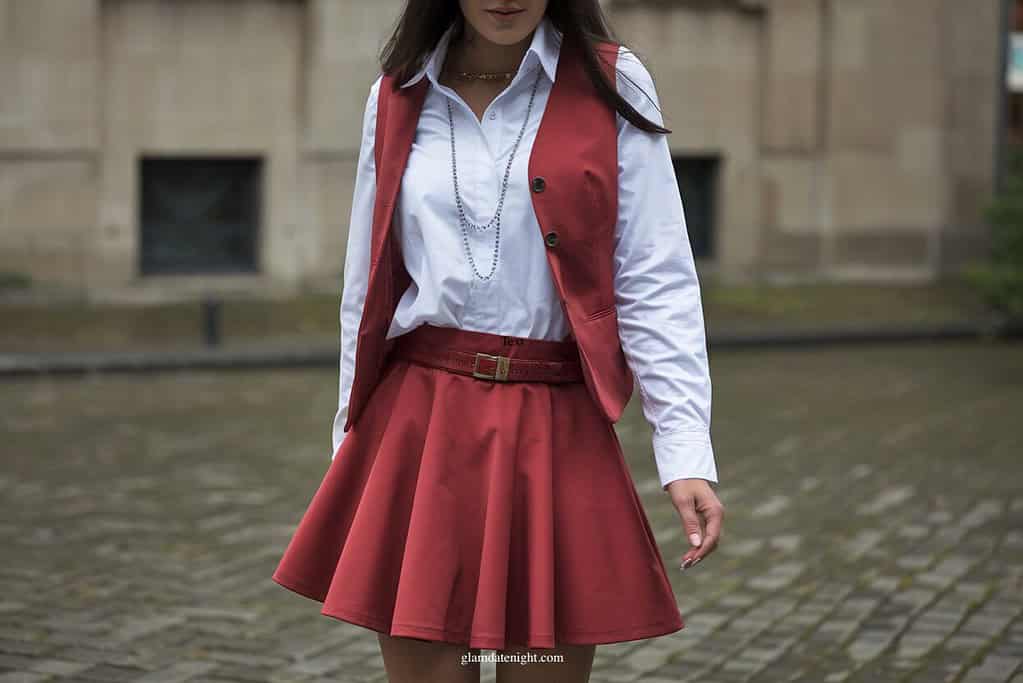
- The Street Style Rule: Elevated street style relies on pairing casual loungewear items with rigid tailoring. Pair a vintage, 100% heavy cotton graphic T-shirt with high-rise, straight-leg distressed denim.
- The Structural Layer: Elevate the raw edges of the t-shirt and denim by adding a structured, double-breasted blazer in solid black or navy. The sharp shoulder lines instantly clean up the silhouette for an evening setting.
- The Footwear Anchor: Complete the layout with clean, low-profile white leather sneakers or leather platform loafers. Avoid athletic running shoes, which distort the classic lines of the tailored blazer.
6. Volume Architecture: Knife-Pleat Midi Skirt & Cropped Knit
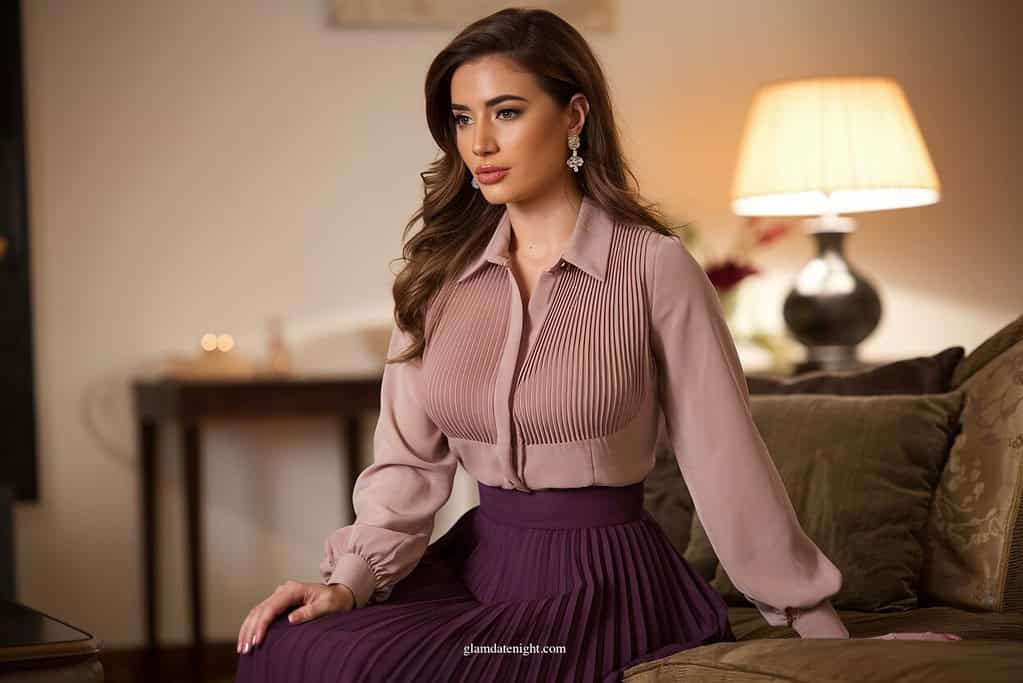
- The Volumetric Contrast Rule: A fluid, knife-pleat midi skirt creates significant horizontal movement. To prevent the outfit from looking unstructured, the upper torso must remain entirely compact. Pair the skirt with a fitted, long-sleeve crop top or a thin mock-neck knit.
- The Placement Line: Ensure the hemline of the cropped top terminates exactly where the high-waisted skirt band begins. This precise line highlights the narrowest section of your waist without exposing excess skin.
- The Visual Extension: Pair this midi layout with pointed-toe leather sock boots that slide completely underneath the skirt hem. This technique eliminates any skin gaps, creating a clean vertical line that makes your legs look longer.
7. Material Textures: Straight-Leg Leather Trousers & Silk Camisole
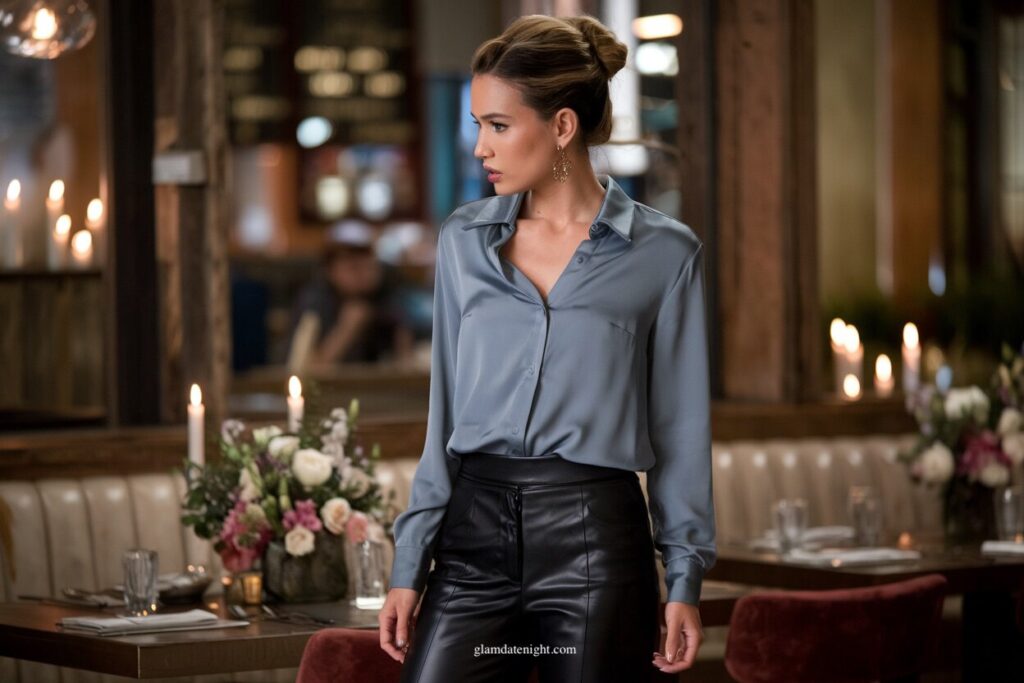
- The Light-Reflective Rule: To make dark trousers distinct under low restaurant lighting, utilize the high shine of genuine leather or dense polyurethane (PU). Pair high-rise, straight-leg leather trousers with a matte, fluid 100% silk or satin camisole.
- The Inner Seam Specification: Choose leather trousers with a sharp vertical panel seam running straight down the center of each leg. This structural seam prevents the stiff fabric from pooling at your knees and keeps the leg profile long.
- The Footwear Transition: Pair the trousers with pointed-toe leather ankle boots or minimalist square-toe mules. Ensure the pant hem clears the floor by exactly 0.5 inches to maintain a clean, unwrinkled lower silhouette.
8. Geometric Proportions: The Fine-Gauge Sweater Dress & Cinch Architecture
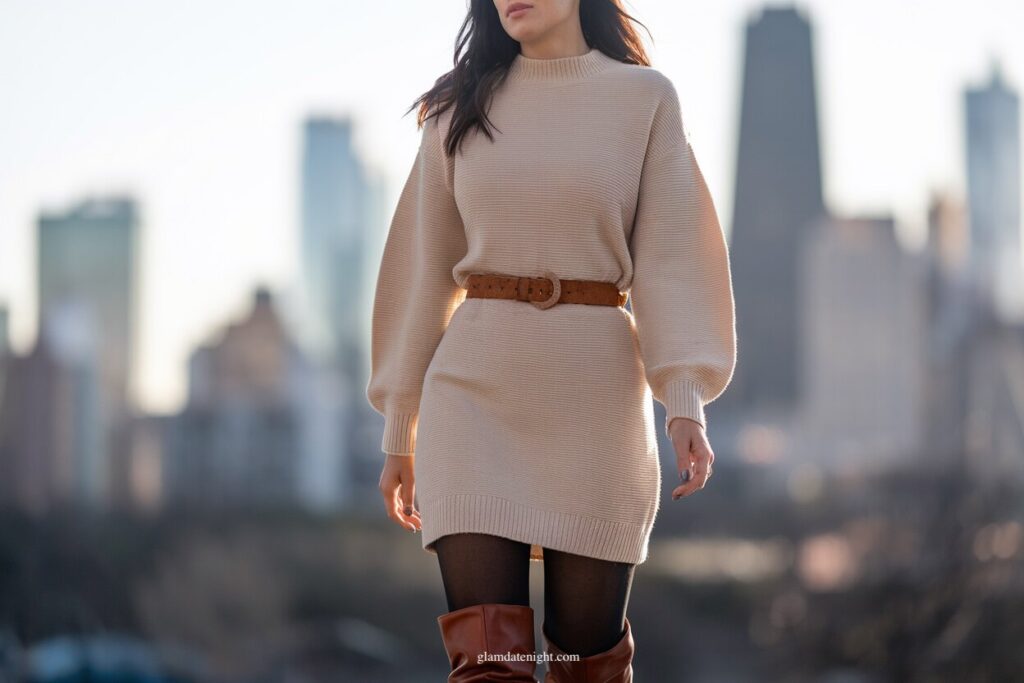
- The Weight Metric: To transform a standard knit sweater dress into an elegant evening silhouette, select a fine-gauge knit containing at least 40% natural fibers (wool, cotton, or viscose). Fine-gauge knits lay completely flat against the skin, allowing you to layer without fabric pooling or bunching up.
- The Rigid Outerwear Rule: Never layer an unstructured cardigan over a knit dress. Instead, introduce structural contrast by adding a tailored wool trench coat or a sharp leather moto jacket that cuts off exactly at your hip bone. The rigid leather or heavy wool frames the soft knit column.
- The Waist Cinch Metric: Avoid a boxy, unshaped appearance by placing a 1.5-inch structured leather belt exactly at your natural waistline. Pull the top section of the dress up slightly over the belt by half an inch. This defines a clear visual division between your upper torso and lower frame without using an image.
9. Denim Architecture: High-Rise Wide-Leg vs. High-Density Skinny Denim
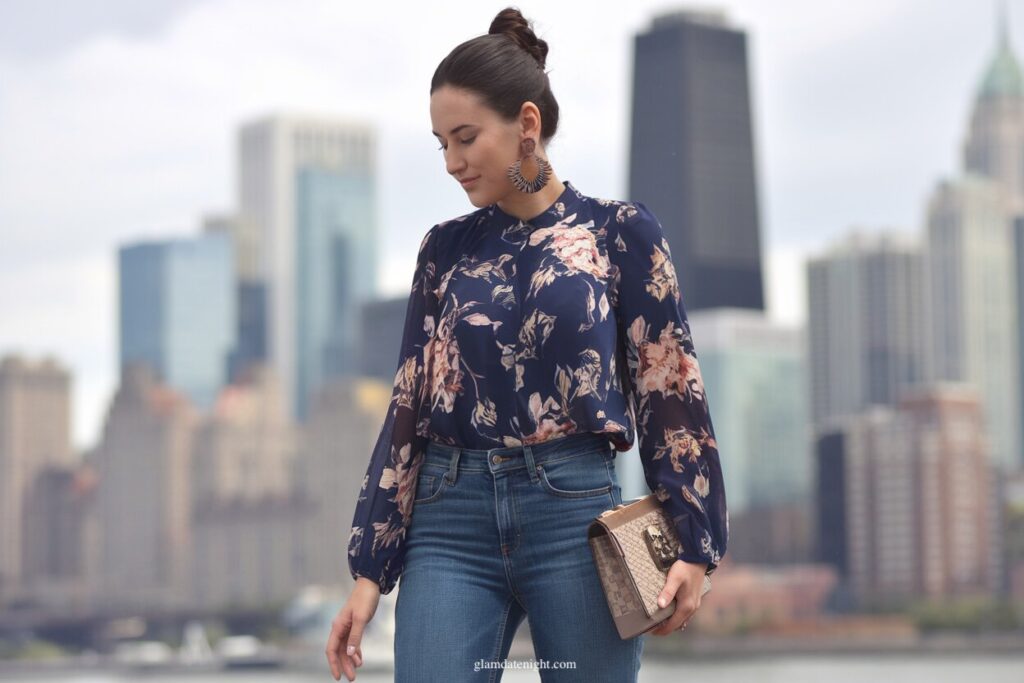
- The Fabric Rigidity Rule: For a casual evening date, your denim must possess a minimum of 98% cotton and no more than 2% elastane. Heavyweight, 12-ounce to 14-ounce rigid denim holds its own architectural shape independently, keeping a smooth line from your hips to your feet.
- The Wide-Leg Silhouette Law: Pair high-rise, wide-leg denim trousers with a completely form-fitting top, such as a high-compression modal bodysuit or a sleek, tucked-in silk camisole. This pairing creates a balanced contrast between a streamlined upper body and a fluid lower frame.
- The Ankle Shaft Clearance: When pairing skinny jeans with ankle boots or leather mules, ensure the denim hem terminates exactly 0.5 inches above the top of the shoe shaft. If the fabric stacks or bunches over the footwear, it creates horizontal wrinkles that visually shorten your leg length.
10. The Multi-Season Layering Matrix: Air-Permeability & Thermal Shifts
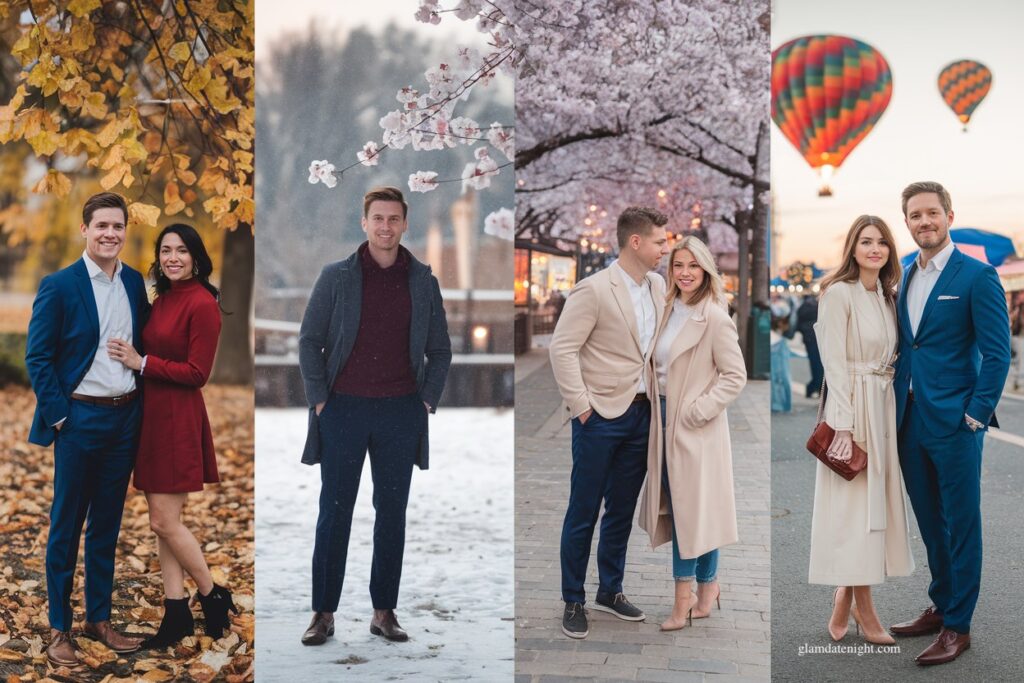
- The Warm-Weather Baseline: During spring and summer dates, optimize your layout for high air permeability. Pair a fluid 100-momme matte silk slip dress or a tiered linen midi skirt with low-profile leather slides. Keep the visual lines clean by skipping bulky outerwear, and rely on subtle texture contrasts like mixing matte linen with light-reflective jewelry.
- The Transitional Fall Strategy: As temperatures drop, adapt your lightweight summer slip dresses by introducing transitional weights. Layer a fine-knit micro-modal turtleneck underneath the slip dress, or drape a structured houndstooth blazer over your shoulders to provide a mid-weight barrier against cool drafts.
- The Cold-Weather Insulation Guide: For deep winter settings, your outfit layers must prioritize thermal density. Swap out lightweight fabrics for 350+ GSM ribbed-knits, heavy velvet, or top-grain leather trousers. Ensure your outermost layer is a tailored, double-breasted wool-blend duster coat that extends past the knees to seal in your baseline body heat indoors.
Conclusion: Universal Rules for Date Night Coordinates
- The Fabric Density Requirement: Prioritize high-density textiles like 14-oz rigid denim, 22-momme silk, and 300+ GSM knits to ensure your garments hold clean, structured silhouettes without relying on visual media.
- The Volume Contrast Law: Always combine opposing shapes—pair high-volume items like wide-leg jeans or tiered skirts directly with high-compression, form-fitting bodysuits to preserve natural body proportions.
- The Texture Balance Metric: Build visual depth in low-light environments by styling light-absorbing fabrics (knits and cottons) side-by-side with highly light-reflective materials (leather, silk, and polished metal hardware).
- The Outerwear Transition Rule: Eliminate soft, unstructured cardigan layers over knit dresses; always utilize rigid outerwear with sharp shoulder profiles to frame your look cleanly for indexing checks.